
ESG Intelligence Tools · ESG Data Intelligence (i-Sector Alpha)
Collect, analyze, and report ESG data on one platform
Pick the regulations you report against and the questionnaire assembles itself. Each organization responds through a single link. What comes back runs through source-cited AI analysis and carries straight into the report.
Solution intro
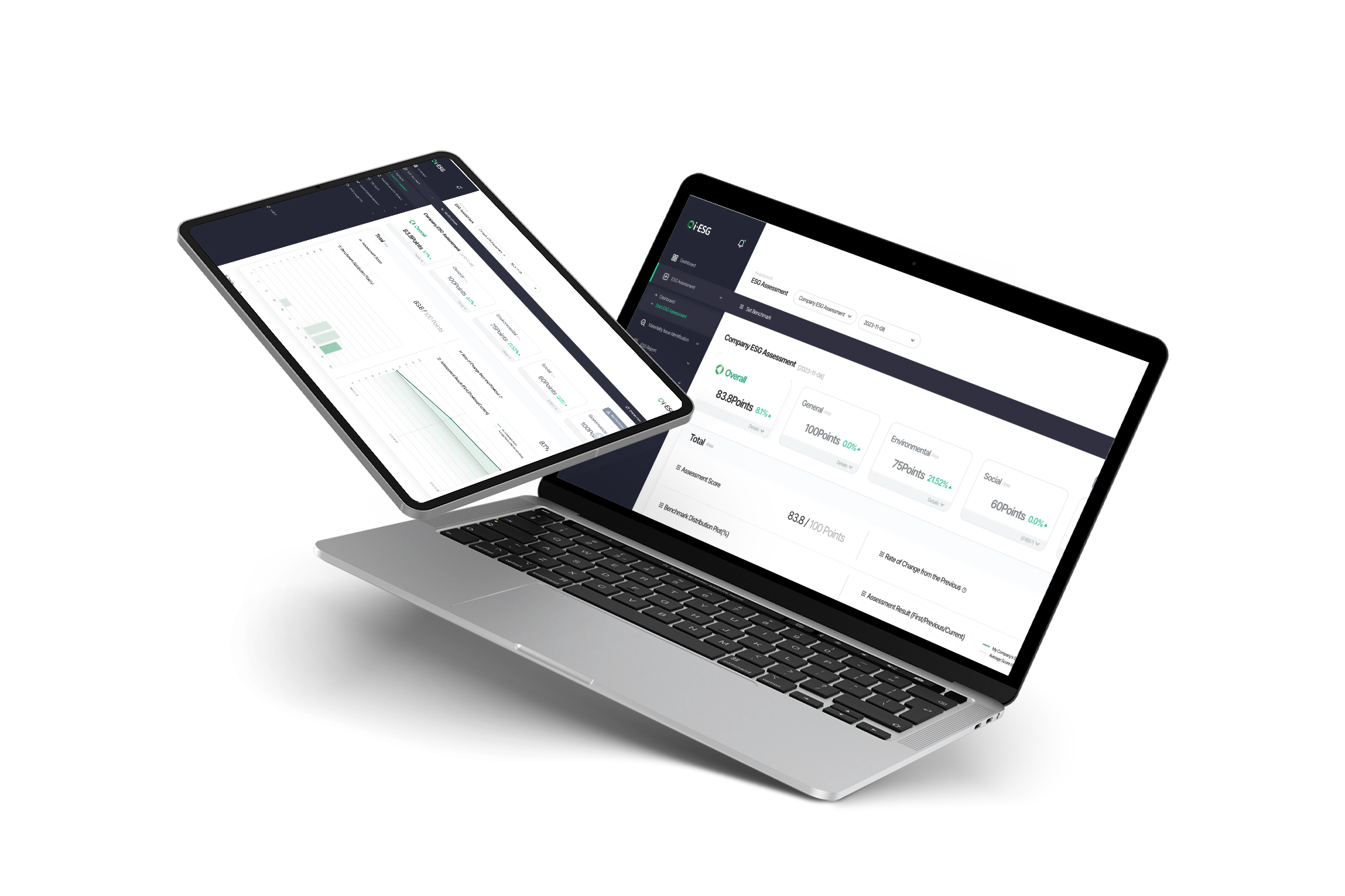
i-Sector Alpha is an integrated ESG data intelligence platform connecting collection, analysis, and reporting.
Data arrives structured, with no spreadsheet consolidation or re-keying. Source-citing AI analysis runs on your own data, and framework-ready reports generate automatically. The platform is built so your team spends time on judgment, not cleanup.
CSRD
ISSB
SFDR
Common challenges in ESG data operations
“Getting data takes dozens of emails”
Formats and deadlines differ by organization, so consolidation becomes its own job.
“Collected data still needs regulatory rework”
Each regulation demands different indicators, so spreadsheet rework never ends.
“Generic AI answers cannot be used in reporting”
Answers without cited sources cannot be verified, so they cannot go into board or regulatory material.
“Board reporting is still manual work”
Even with data ready, shaping it into a report takes days more.
Key features
Collect → Understand → Report, one connected flow
From data intake to report output.
Questionnaire design, done by selecting regulations
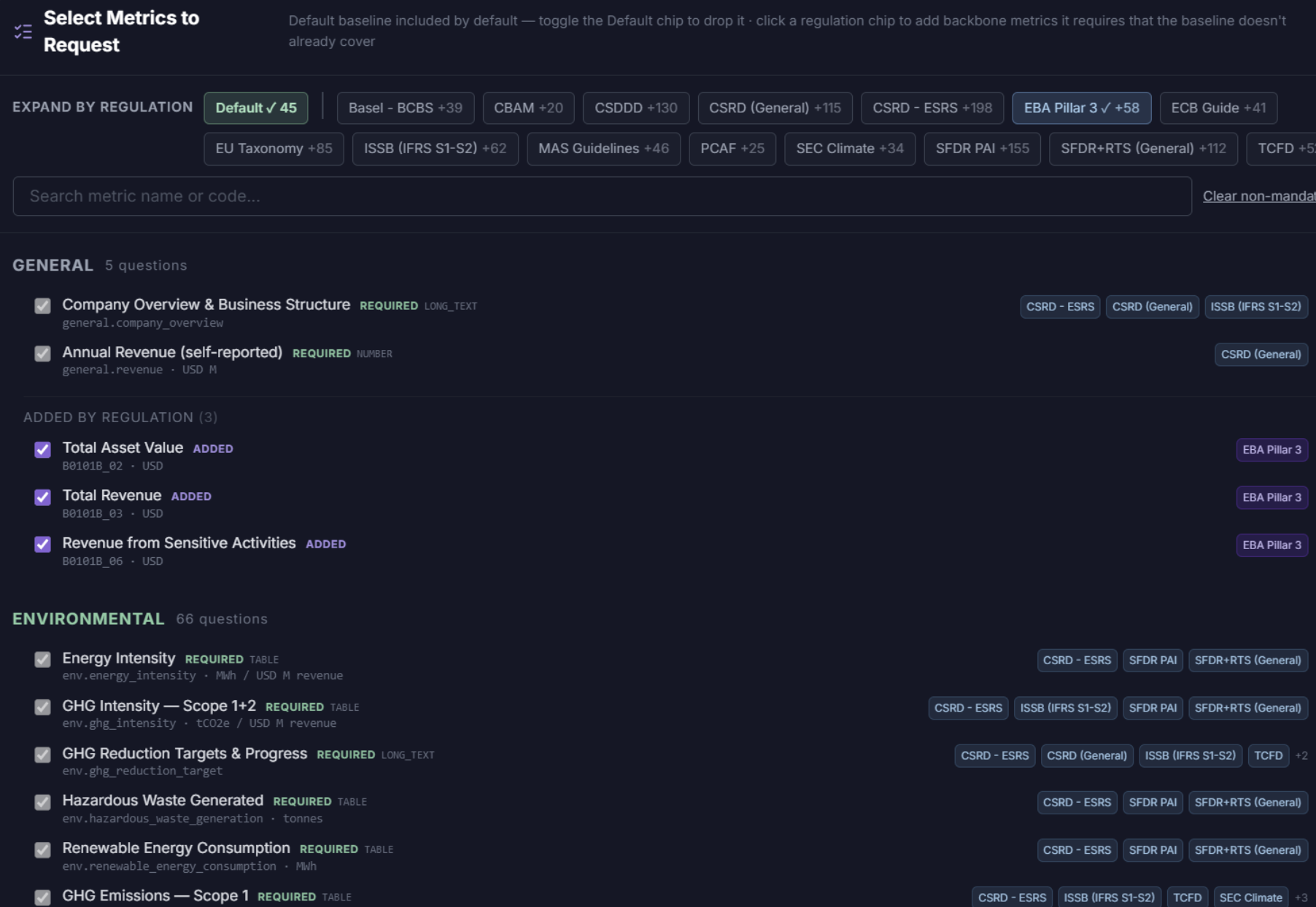
Pick the regulations and frameworks you report against (CSRD, ISSB, SFDR, TCFD, and more). The exact data request assembles itself. Each entity receives a secure magic link, with no account or login. Answers and documents come back structured, ready to use.
AI analysis that cites every source
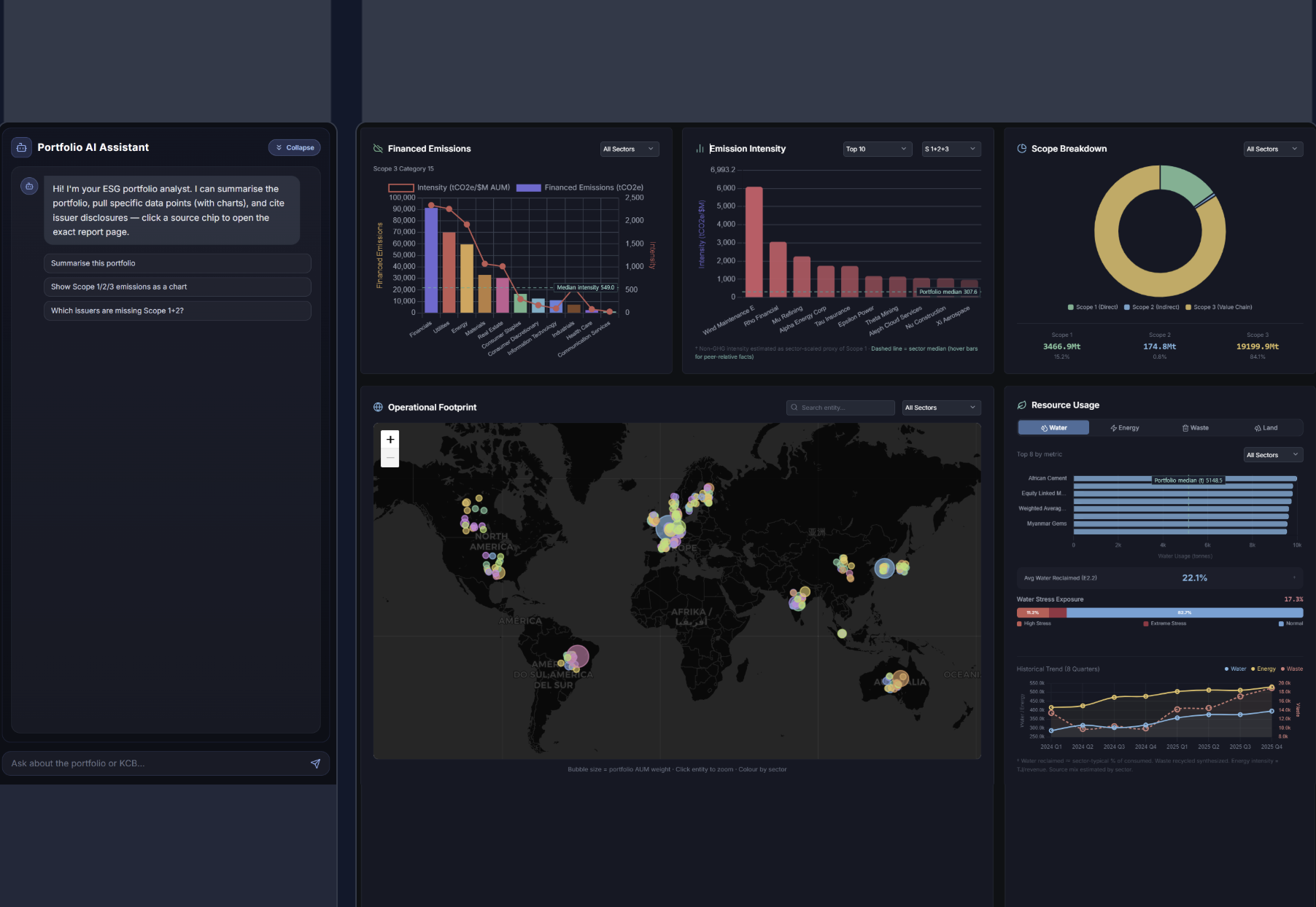
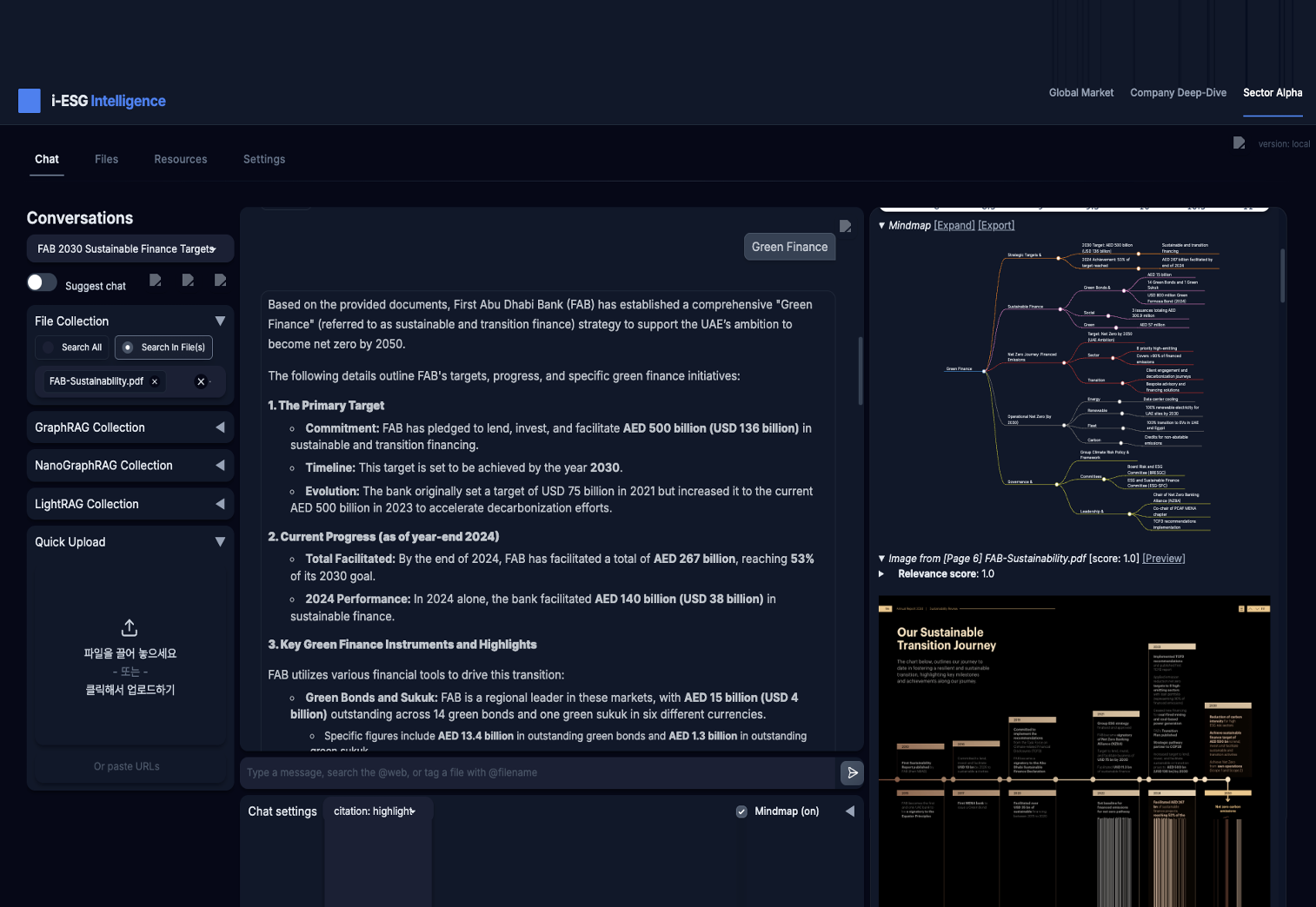
Collected data visualizes automatically. Deep Analysis, a RAG-grounded AI assistant, retrieves from your own data and documents before answering. Hallucination is minimized and every reply cites its source.
Change the framework, and the report reconfigures
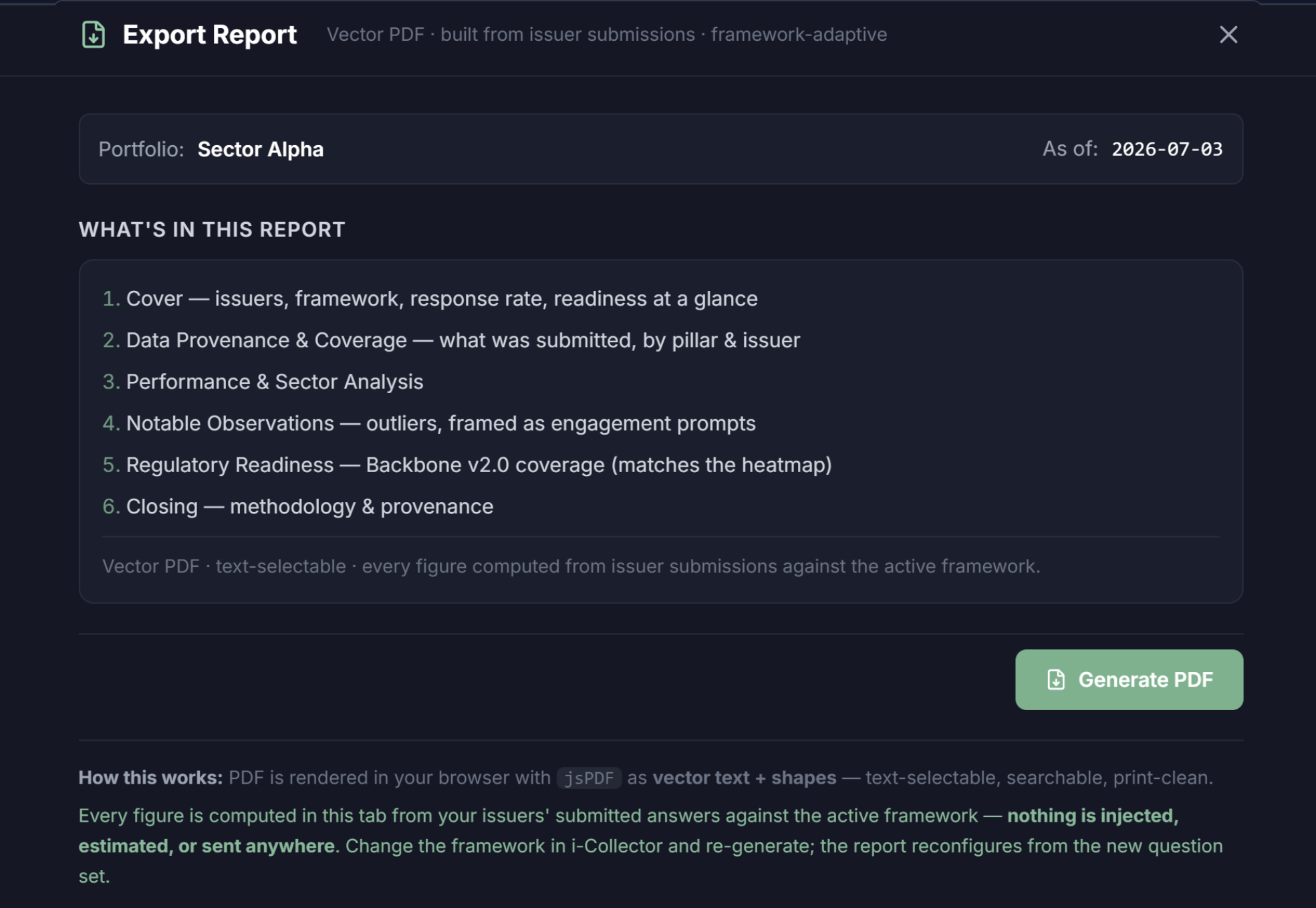
Reports generate from exactly what entities submitted plus your knowledge base. Nothing is injected or estimated. Customize per audience, from board packs to regulatory disclosures.
One answer satisfies many standards
A 1,000+ metric backbone encodes how metrics relate across frameworks. One collected answer maps to your selected disclosure frameworks. Performance benchmarks against 20M+ data points drawn from 17,000+ reports.
Outcomes
What changes when wrangling goes away
90
%+
less time collecting data
2
x+
higher response rates
1,000+
metric standardization backbone
20M+
benchmark data points
Entities respond through a secure link, with no account or login
Single-tenant cloud or on-premise (air-gap) deployment
Identical backbone and outputs in either deployment mode
Trust
Why trust i-ESG
Certifications and patents
Born as a Fortune 500 in-house venture
Certified B-Corp
ISO 9001/27001
13+ ESG-related patents
UNGC member
Security
AES-256 / TLS 1.3 encryption
Air-gapped on-premise option
500+
global clients
1,000+
metric backbone
20M+
benchmark data points
Follow your data from collection to a finished report, in a live demo.
FAQ
Questions we hear most often during evaluation
Do responding entities need to learn the system?
No. Respondents open a secure link, answer the questionnaire, and upload documents. No account is needed.
Which regulations and standards are supported?
CSRD/ESRS, ISSB, SFDR, TCFD, EU Taxonomy, PCAF, SEC Climate, and more are selectable. The 1,000+ metric backbone auto-maps to your selected disclosure frameworks.
Can AI answers be used in reporting?
Deep Analysis retrieves from your data before answering and cites every source. Original documents stay verifiable, so outputs can support reporting.
Can it run under strict security requirements?
Both single-tenant cloud and on-premise (air-gap) deployments are supported, with identical features and outputs.